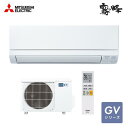
Japan plans to raise energy efficiency standards for wall-mounted home air conditioners from April 2027. The rules aim to improve the efficiency of products shipped by manufacturers and other covered businesses. Households will not have to replace their existing units all at once.
The phrase "air conditioner 2027 problem" may suggest that all inexpensive models will disappear or that waiting to buy will cost you more. However, the system does not impose a blanket sales ban on models that fall below the standards. You can base your timing on the condition of your current unit, how much you use it, and your budget including installation.
This article explains Japan's system and what to check before buying, using government information checked on November 12, 2026.

Which types and standards change in April 2027
The changes fall under the Top Runner Program established by Japan's Act on Rationalizing Energy Use and Shifting to Non-fossil Energy. The Ministry of Economy, Trade and Industry set the new standards in May 2022, with fiscal year 2027 as the target year for wall-mounted types. These rules were established earlier; they were not first decided in 2026.
| Type of home air conditioner | Target year for the new standards | What to check when buying |
|---|---|---|
| Conventional wall-mounted types | Fiscal year 2027, starting in April 2027 | Standards vary by capacity and cold-climate specification |
| Other types and multi-split systems with individually controlled indoor units | Fiscal year 2029 | The change does not apply to every type in April 2027 |
A multi-split system connects multiple indoor units to one outdoor unit. Some types, including window units and cooling-only models, are excluded from the program's scope, so check the type you plan to buy rather than assuming all home air conditioners follow the same rules. Commercial units also have separate categories from the household types discussed here.
Efficiency is measured by the annual performance factor, or APF. This divides the heating and cooling energy needed over a year under specified conditions by the electricity consumed. A higher number indicates greater efficiency.
For example, under the new standards, wall-mounted units with a cooling capacity of 2.8 kW or less have an APF target of 6.6 for the category without cold-climate specifications and 6.2 for the cold-climate category. Larger-capacity units use different formulas, so APF 6.6 is not a universal pass mark for all air conditioners.
Existing units can stay in use, and below-standard products face no blanket ban
The Top Runner Program requires manufacturers and importers to improve energy efficiency. As a general rule, compliance is assessed within each category using an average that accounts for the number of units shipped during the fiscal year. Manufacturing or shipping a model is not immediately banned simply because it falls below its target value.
Households have no obligation to remove or replace an air conditioner simply because April 2027 arrives. The standards change will not itself prevent repairs either. Whether a particular unit can be repaired depends on its model, the fault, and spare-parts availability. Have its model number and manufacturing year ready when asking about repairs.
Manufacturers may revise their ranges to meet the standards, which could change the models and price brackets available. The absence of a sales ban does not guarantee that today's models will remain available indefinitely.
There is no fixed price increase or universally cheaper time to buy
The Agency for Natural Resources and Energy says improved efficiency could lead to higher selling prices. Materials, manufacturing and transport costs, supply and demand, and extra features also affect prices. The policy alone cannot establish that every model will rise by a certain amount or that buying by March 2027 will always save money.
If your current unit heats or cools unreliably, first check how long an inspection or replacement would take, rather than waiting for the standards to change. If it works normally, the policy change alone does not require an urgent replacement.
Electricity costs matter differently in a living room used throughout the day and a guest room used briefly. Compare candidates in the same capacity class with the features you need, taking account of how much you use the room.
Check the target year, achievement rate, and electricity costs together
Japan's uniform energy-saving label shows information including compliance with efficiency standards and estimated annual electricity costs. Look beyond the star rating and check the following details to understand the basis for comparison.
- Target year: For a wall-mounted model, check whether the label refers to the fiscal year 2027 standards. This is different from the product's release year.
- Energy efficiency standard achievement rate: This is the percentage relative to the standard applicable to that model. A rate of 100% or more meets the standard, but do not directly compare percentages based on different target years or categories.
- APF: Use this to compare efficiency among candidates of the same capacity class. Check conditions such as cold-climate specifications as well.
- Seasonal electricity consumption and estimated annual electricity costs: These are comparison figures based on specified operating conditions. Check the electricity rate used to calculate the cost, too.
Estimated annual electricity costs are not a promise of your household's bill. Region, insulation, temperature settings, operating hours, and your electricity contract affect actual costs. To estimate savings from replacing an older unit, compare its model number with the candidate's under the same conditions.
Check installation requirements and total costs before replacing a unit
Before comparing efficiency, establish the heating and cooling capacity your room needs. Even rooms with the same floor area can need different capacities depending on timber or reinforced-concrete construction, sun exposure, and insulation. If you also use the unit for winter heating, check its recommended room size for heating and its heating capacity at low outdoor temperatures.
Ask whether the quote includes standard installation, whether longer piping or electrical work is needed, and what removal, collection, transport, and recycling of the existing unit will cost. Before buying, confirm the indoor unit's installation width, outdoor unit location, supply voltage, and other site requirements with the retailer or installer.
One way to compare costs is: upfront costs for the unit, installation and removal, plus estimated annual electricity costs multiplied by the years you expect to use it. This is an approximation that excludes repairs and future changes in electricity rates. With short operating hours, electricity savings alone may not recover the extra cost of a more efficient unit.
Even when looking for a wall-mounted heating and cooling air conditioner for a room of around six tatami mats, a product title saying "energy saving" does not establish compliance with the new standards. Check each model's achievement rate, seasonal electricity consumption, and installation requirements.